

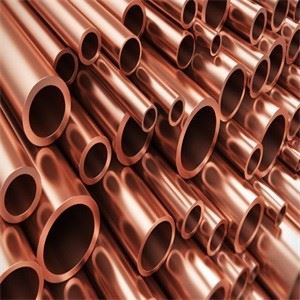
Product presentation:
Copper pipe connection is the process of connecting copper pipes to form a whole. There are various ways to connect copper pipes, which can be achieved by welding, threading, clamping and crimping. Regardless of the method used, copper pipe connections have a wide range of applications, especially in the industrial and construction fields.
It is widely use in many fields like the following:
1. Construction field: Copper pipe connection is widely used in the construction field, mainly including water supply, heating, air conditioning, gas, fire control and so on. The copper connection ensures the tightness and safety of the piping system, while also improving the decorative and aesthetic properties of the building materials.
2. Refrigeration ice making field: The application of copper pipe connection in this field is also very common, mainly used for the internal cooling pipe connection of various refrigeration equipment. It is characterized by tight connection, not easy to leak, not burning, not easy to age, corrosion resistance, etc., and is widely used in ice makers, refrigerated warehouses, refrigerated trucks and other equipment.
3. Marine field: The application of copper pipe connection in the Marine field is also very extensive, mainly used for pipeline connection inside the ship. It is characterized by strong corrosion resistance and does not produce electrochemical reactions, making it very suitable for use in Marine environments.
4. Automotive parts: The application of copper pipe connection in the field of automotive parts is also very common, mainly used for the connection of brake and hydraulic brake pipelines. It is widely used in automobile braking system because of its characteristics of reliable connection, strong compression resistance and non-aging.
Feature of Induction welding of Copper connection:
Corrosion resistance: Copper pipe has good corrosion resistance and is not easily affected by external factors in long-term use.
Good sealing: The copper pipe connection is connected by screw fastening or welding, which ensures the tightness of the connection and avoids the problem of water leakage.
High temperature resistance: Copper pipe connection can withstand high temperature environment, stable and reliable performance.
Beautiful appearance: The surface of the copper pipe connection is smooth, and the color is glossy and bright, making the pipeline system more beautiful.
Production of Induction welding of Copper connection:
First, copper pipe processing
First of all, before producing the copper pipe connection, the copper pipe needs to be processed. The purpose of copper pipe processing is to produce various specifications and models of copper pipes to meet the needs of different applications. Copper pipe processing methods include cutting, stamping, drilling, grinding and drawing.
Second, flame welding
Flame welding is a traditional copper pipe connection method, its principle is to use high temperature to heat two copper pipes to the melting point, and then quickly cool, so that it has a combination effect. This method is simple to operate, but requires highly skilled operators who can perform stable operations at high temperatures to ensure welding quality.
Three, copper washer connection
Copper washer connection is another common copper pipe connection method, suitable for copper pipe connection directly or with other materials. The role of the copper washer is to fill the concave and convex of the joint, so that the fine gap between the two pipes is sealed by the copper washer, so as to achieve good sealing effect and structural stability.
Four, crimping
Crimping is another simple way to join loose copper pipe connections. This method requires the use of special tools to apply some pressure at the joint to make it fit together. Crimping method has the advantages of fast speed, simple operation, and is suitable for general copper pipe connection.
Operating requirement:
1. Select the correct copper pipe connector
The correct type, specification and quality of copper pipe connectors should be selected according to working pressure, temperature, flow and other parameters to ensure the safety and reliability of the connection. When purchasing and using copper pipe connections, products that meet national standards or other relevant standards should be selected to ensure product quality and performance.
2. Prepare
Before installing the copper pipe connection, check the size of the copper pipe and the finish of the end face to ensure that there is no bump, notch, damage, etc. At the same time, the appropriate tools and materials should be prepared, such as wrenches, cutting tools, cleaning materials and the required sealing materials, glue, screws, etc.
3. Installation process
The installation of copper pipe connections should comply with the provisions of relevant standards, and fully consider the working pressure, temperature, flow rate and operating environment of the pipeline system. During the connection process, the nut should be gradually tightened to avoid excessive suction or loosening, and to ensure the air tightness and pressure resistance of the copper pipe connection.
4. Maintenance
In order to ensure the long-term use of copper pipe connections, regular inspection and maintenance are required. Check whether copper pipe connections are damaged, leaked, or rusted, and maintain them in a timely manner. At the same time, sealing materials, screws and other parts should be replaced regularly.
FAQ:
Q: What are the common connection methods for copper pipe connections?
A: Common connection methods for copper pipe connection are:
Thread fastening: thread connection is used, an interface is opened at the end of the copper pipe, and the thread is set together to form a connection.
Welding: The use of welding connection, more tight and firm.
Cone casing: The end of the pipe is machined, fitted with a matching cone casing, and then pressed to form a connection.
Plug joint: Insert a pipe into another pipe to form a connection, suitable for small diameter copper pipe connection.
Q: What are the installation steps for copper pipe connections?
A: The installation procedure for copper pipe connection mainly includes the following:
Tools: Copper pipe tools, including scissors, pliers, and wrenches, are ready.
Pipe cutting: Use pipe cutters to cut copper pipe to the desired length.
Welding treatment: The pipe that needs to be connected is pretreated and treated by tin welding or oxygen welding.
Connection operation: Connect the treated pipe to ensure that the connection is smooth and firm.
Pipe test: After connecting pipes, test them to ensure that there is no leakage or damage.
Q: What do I need to pay attention to in the maintenance of copper pipe connections?
A: The maintenance of copper pipe connection needs to pay attention to the following points:
Cleaning pipes regularly: Cleaning pipes can prevent dirt and corrosion and increase the service life of copper pipes.
Check the connection regularly: Check the copper pipe connection regularly to ensure that the connection is not loose and leaking.
Prevent copper pipe exposure to sunlight: long-term exposure to sunlight will make the copper pipe connection brittle, cracking and other problems.
Avoid strong alkaline and acidic substances: Strong alkaline and acidic substances will have a corrosive effect on the copper pipe connection and damage the pipeline system.
Hot Tags: copper connection, China copper connection manufacturers, suppliers