


OD(outer diameter):generally 6-40mm, spacing is 2mm
Length:Generally 6 meters or 12 meters, we will also produce fixed length steel bars according to user needs
Stainless Rebar

Your Professional Stainless Rebar Supplier
Hormann (Jinan) Metal Co., Ltd. was a company specializing in the professional production of various specifications and models of steel, research and development, design, production, sales, and service. Our products include galvanized steel, seamless steel pipe, stainless steel, aluminum alloy, copper alloy, black iron sheet, stainless rebar, and prepainted steel coil.
Why Choose Us
Wide Range of Applications
Our products are used in the construction industry, automotive industry, shipbuilding industry, chemical industry, metallurgical industry, aerospace industry, etc.
Broad Market
Our products are sold to the global market, mainly in the Middle Eastern countries, North America, Australia, and other regions, and have won unanimous praise.
Professional Advanced Equipment
We have a series of equipment specializing in the production of steel, including steel plate pretreatment equipment, steel plate leveling equipment, cutting machines, cold processing equipment, assembly equipment, welding equipment, correction equipment, painting equipment, lifting equipment, transportation equipment.
Leading Service
Professional engineers can provide consultation on sprocket expertise and professional advice on product selection, design, installation, and maintenance.
-
![DIN Deformed Steel Rebar]()
-
![304 16mm Stainless Steel Rebar]() 304 16mm Stainless Steel RebarOD(outer diameter):16mmread more
304 16mm Stainless Steel RebarOD(outer diameter):16mmread more
Length:can be customized according to customer requirements -
![Ribbed Bar]() Ribbed BarStandard:AiSiread more
Ribbed BarStandard:AiSiread more
Brand Name:Hormann metal
Specification:Diameter(6-50mm) 6mm,8mm,10mm,12mm,16mm,20mm,22mm,25mm,28mm,32mm, 40mm,50mm Or OEM Length:6m-12m as your required
Alloy... -
![B500B Thread Rebar]() B500B Thread RebarB500B rebarread more
B500B Thread RebarB500B rebarread more
Method of weight calculation: calculation
Diameter: 6-40mm
Length: 6-12m
Processing services: bending, welding, punching, returning, cutting -
![Stainless Steel Concrete Reinforcement]() Stainless Steel Concrete ReinforcementModel:HRB335/HRB400/HRB500read more
Stainless Steel Concrete ReinforcementModel:HRB335/HRB400/HRB500read more
Alloy Or Not:Non-Alloy
Processing Service:Bending, Welding, Cutting, Punching
Length:1-12m or custom made
Tolerance:±1% -
![Cold Rolled Steel Bar]() Cold Rolled Steel BarMaterial:ASTM/AISI/ Q195-q345read more
Cold Rolled Steel BarMaterial:ASTM/AISI/ Q195-q345read more
Diameter:1-1500mm
Standard:DIN GB ISO JIS BA ANSI
Grade:SUS201, SUS304, SUS316, A2-70, A2-80, A4-80, 4.8 6.8 8.8 10.9 12.9
Length:... -
![Cold Rolled Deformed Steel Bar]() Cold Rolled Deformed Steel BarProduct process: weldingread more
Cold Rolled Deformed Steel BarProduct process: weldingread more
Material: CRB550 HRB400 HPB300 Straight bar steel deformed steel bar
Product size: customized according to customer requirements -
![Cold Rolled Rebar]() Cold Rolled RebarStandards: AiSiread more
Cold Rolled RebarStandards: AiSiread more
Width: ±1%
Length: 6-12 m
Diameter (mm) : 6, 8, 10, 12, 14, 16, 20, 22, 25, 30, 32, 50
Processing: bending, welding, returning, cutting,... -
![Hot Rolled Round Steel Bar]() Hot Rolled Round Steel BarDiameter: Φ12, Φ14, Φ15, Φ16, Φ18, Φ20, Φ22, Φ25, etcread more
Hot Rolled Round Steel BarDiameter: Φ12, Φ14, Φ15, Φ16, Φ18, Φ20, Φ22, Φ25, etcread more
Alloy Or Not:Non-Alloy
Standard:ASTM
Model Number:HRB400 HRB500 HPB30
Length:1-12m Customized according to...


Definition of Stainless Rebar
Stainless steel reinforcing bars are low carbon steel alloy bars and contains minimum 12% of chromium and 8 to 12% of nickel in it. Stainless steel bars are highly corrosive resistant and they can be cast, pressed and machined. In Most services, stainless steel is the most cost-effective and highly corrosion-resistant steel reinforcing option. When a structure is built using structural steel reinforcement, the demand for maintenance during the project’s life cycle is greatly reduced.

What are Advantages of Stainless Rebar


More Forgiving During Installation
Even if you flush with the concrete surface, there won't be any corrosion risk if you use stainless steel. This means that the entire process, from pouring the concrete to curing, coating, and more, can be relaxed.
Mechanical Strength Allows for Reduced Concrete Thickness
More significant structures usually need thicker concrete poured, but this is not always necessary for minor construction projects. As such, the stability of the concrete should not be compromised. The strength of stainless steel and its corrosion resistance property allows for a reduced thickness of concrete. This will lighten the structure's weight significantly and also cut the cost of transportation for prefabricated pieces.
Easier to Work With
Compared to galvanised or coated steels, stainless steels are easier to handle. Manipulation and welding will require less effort, and you won’t have to worry too much about the abrasion or any type of damage during installation.
Lasts Longer
Compared to galvanised steel, stainless steel is more durable – so much so that it has been proven to last at least five times longer than the former, even with exposure to corrosive environments. On top of that, it can also withstand rough use.
Reduces the Need for Maintenance or Repair
Because of stainless steel’s strength, you won't have to worry about spending a lot of money on regular maintenance or repair. Even the expenses for repeat inspections, an interruption for engineering tasks, and demolition may be eliminated.
Solves Chloride-Related Problems
The problem with concrete is that it often acts like a sponge that seeps in water. This is a problem if the rebar used is made of carbon steel as it could corrode, especially if exposed to more aggressive environments like seawater. However, this won't be a problem with stainless steel, which can solve any problem associated with chloride-induced corrosion.
Has Low Magnetic Permeability
Some structures require low magnetic permeability, like transformer bases, electronic equipment housings, and medical buildings. These are structures that no strong magnetic field should disturb or affect. It has a low magnetic permeability with stainless steel, making it the best choice for these types of buildings or applications.
More Heat Resistant Than Standard Steel
Because of its low thermal conductivity, coupled with its incredible strength even at extreme temperature, stainless steel has better heat and fire resistance properties than standard steel. This ultimately ensures the safety of the structure and its occupants.
What are Features of Stainless Rebar
01/
Steel of Excessive Hardness
Stainless steel has a 10% higher chromium content than some other alloying components. Chromium is the main component that boosts the strength and hardness of the material. Nickel is also present, which gives similar benefits while maintaining ductility and toughness. Duplex steel bars outperform austenitic steel bars in terms of strength.
02/
Resistance to Corrosion
Stainless steel rebars contain a high chromium concentration, which generates an oxide coating that inhibits corrosion. This property allows it to survive the damaging effects of chloride, which can be found in road salts, ocean, and even concrete. Because it contains at least 16% chromium, austenitic stainless steel has the best corrosion resistance.
03/
Ductility
The nickel presence in stainless steel rebar gives it ductility. These rebar materials are ideal to be used in earthquake – prone areas, frozen operations, railroads, and other applications due to their exceptional ductility and corrosion resistance. To know more about the properties of steel bars do check out Bharat Steel Dealers.
04/
Magnetic Reaction
Stainless steel bars have a low magnetic response due to their high nickel content. Due to its high magnetic permeability, normal carbon steel cannot be used in many applications. Rebars made of stainless steel come to the aid!
05/
Resistance to fire
When compared to ordinary carbon steel bars, stainless reinforcement bars function greater at higher temperatures. Because of its high potency retention factor at increased temperatures (over 500°C), they are more fire resistant.
06/
Resistance to Cryogenics
Stainless reinforcement bars can withstand a broader temperature range. Austenitic steel retains its strength and modulus of elasticity even at sub-zero temperatures, allowing it to be used in a variety of applications.
Common Types of Stainless Rebar

01.
Stainless Steel Rebar Constructed of Austenitic Austenitic
Austenitic steel has a high nickel concentration (around 7 percent ). As a result, the alloy is exceptionally weldable and malleable, as well as having excellent corrosion resistance. It also contains a considerable amount of chromium and a molybdenum addition of 2% to 3%. This increases its corrosion resistance in harsh environments, particularly when chlorides are present. The nitrogen content provides tensile characteristics and a higher yield. Austenitic steel is often used as reinforcing bars in industrial pipelines and architectural projects due to its great flexibility, diamagnetic character, and wide temperature range. It is classified into different categories in different countries based on the proportion of components present.
02.
Duplex Stainless Steel Rebar or Austenitic-Ferritic Stainless Steel Rebar
Duplex stainless steels are a superb combination of ferritic and austenitic steels that are stronger than both and are commonly used in the subsea oil industry. This is because of its great corrosion resistance, which enables it to withstand highly corrosive saline for extended periods of time. Rebar is the most common use for this metal. The combination of Austenitic and Ferritic stainless steel has provided an outstanding element of strength and durability to structure boards, obstruction, and concrete structures, grounding processes and dovetail joints, chemical manufacturing facilities, coastline piers, and wharves, structure railings, sidewalks, and bridge pilings. Duplex Stainless Steel has a lower nickel concentration than Austenitic steel, making it less expensive.


Applications of Stainless Rebar
Use in Marine Structures
As it is corrosion-resistant, the stainless steel rebar is appropriate for use in marine systems. Near docks and the sea, the air is damp; hence the chances of corrosion are high. The use of the wrong material affects the construction that results in a weak structure in the long run. Engineers prefer the use of stainless steel there. Sea walls, bridge decks, barriers, anchoring systems, columns, and all related structures mostly use stainless steel rebar.
Use in Chemical Industry and Areas With High Seismicity
Apart from the marine areas, stainless steel rebar is a preference in the chemical industry. Chemicals have their properties. Harsh ones can break through steel. Hence, using corrosion-resistant material is essential. Besides the chemical industry, stainless steel rebar is the choice in areas of high seismicity. The rebar here has the strength to hold the structure in the right position.
Components of Stainless Rebar
Carbon
It strengthens the steel. At elevated temperatures it helps resist creep. Low carbon (0.03 %) is employed when welding and for improved corrosion resistance is needed.
Chromium
Around 11.5 % chromium is needed for a stable, passive, chromium oxide film to form and thus make the steel ‘stainless’. Chromium up to 26 %, along with molybdenum and nitrogen, increases corrosion resistance to initiation of pitting and crevice corrosion.
Molybdenum
It enhances resistance to initiation and propagation of pitting and crevice corrosion.
Nickel
It improves general corrosion resistance, ductility, toughness, strength, enhances resistance to the propagation of pitting/crevice corrosion and assists in defining the steel structure.
Nitrogen
It enhances pitting/crevice corrosion resistance particularly in combination with chromium and molybdenum and increases strength of the steel.


How is Stainless Rebar Shipped and Handled
- Prior to shipping, ensure that all chains and steel bands will not come into direct contact with the stainless steel rebars. Wood or other soft materials (thick cardboard) should be placed under the tie-downs. Alternatively, nylon or polypropylene straps should be used to secure the rebars.
- When bundles of carbon steel and stainless steel rebars must be shipped one on top of the other, the stainless steel rebars should
- Be loaded on top. Use wooden spacers to separate the two materials.
- Outside storage of stainless steel rebars is acceptable. Consideration should be given to covering the stainless steel rebars with tarpaulins.
- Stainless steel rebars should be stored off the ground or shop floor on wooden supports. Stainless steel rebars should be stored separately from carbon steel rebars.
- Keep carbon steel tools, chains, slings, etc. off stainless steel rebars.
- Stainless steel rebars that require movement by fork-lift truck should be adequately protected so as not to scratch them or to contaminate the material by direct contact with the forks.
- Do not use carbon steel lifting devices. Use nylon or polypropylene slings.
Our Certificate
Our professional quality inspectors will conduct a quality inspection on each batch of products. Furthermore, authoritative test reports are also available.


Our Service
Customers can choose any length or other requirements, order or purchase various steel products or request special specifications.
Adjusting for the temporary lack of specifications in this library, saving you the trouble of rushing to buy.
Our transport service, which can be delivered directly to your designated place.
For the sold materials, we are responsible for the overall quality tracking, in order for you to eliminate worries.
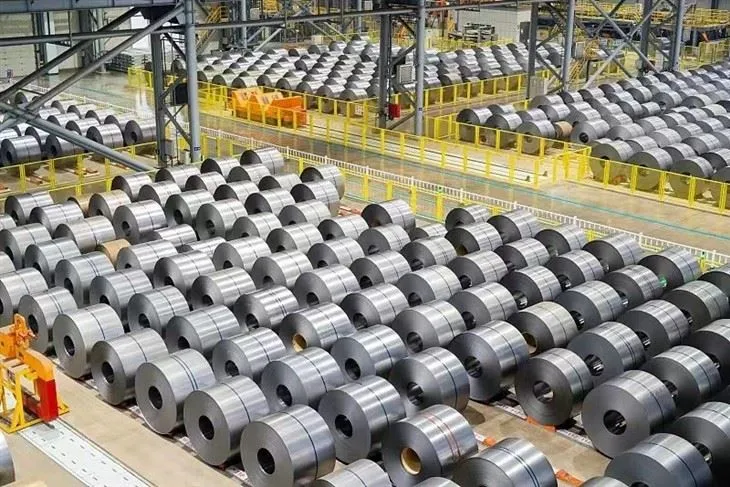

Our Factory
One-stop service helps you choose products suitable for your market and budget, save time, and achieve win-win cooperation.
Contact Us
Email
nancy@cn-hormann.com
Address
No. 2687 Ziwei Road, University Science Park, Changqing District, Jinan City, Shandong Province Room 1015, Area A, 10th Floor, Building A, West Innovation Park, Jinan
Phone
+8618769555682
+8613153828686
+8613153828686
Frequently Asked Questions
As one of the most professional stainless rebar manufacturers and suppliers in China, we're featured by quality products and competitive price. Please rest assured to buy stainless rebar for sale here and get free samples from our factory. Also, customized service is available.
Cold Rolled Rebar, Cold Rolled Deformed Steel Bar, Cold Rolled Steel Bar