


Thickness: 0.12-6mm
Width: 600-1500mm
Galvanized: 30-275 g/m 2
Surface treatment: Passivation (C), oiling (O), lacquer seal (L), phosphating (P), Untreated (U)
Surface structure:...
Galvanized Steel Coil

Your Professional Galvanized Steel Coil Supplier
Hormann (Jinan) Metal Co., Ltd. was a company specializing in the professional production of various specifications and models of steel, research and development, design, production, sales, and service. Our products include galvanized steel, seamless steel pipe, stainless steel, aluminum alloy, copper alloy, black iron sheet, stainless rebar, and prepainted steel coil.
Why Choose Us
Wide Range of Applications
Our products are used in the construction industry, automotive industry, shipbuilding industry, chemical industry, metallurgical industry, aerospace industry, etc.
Broad Market
Our products are sold to the global market, mainly in the Middle Eastern countries, North America, Australia, and other regions, and have won unanimous praise.
Professional Advanced Equipment
We have a series of equipment specializing in the production of steel, including steel plate pretreatment equipment, steel plate leveling equipment, cutting machines, cold processing equipment, assembly equipment, welding equipment, correction equipment, painting equipment, lifting equipment, transportation equipment.
Leading Service
Professional engineers can provide consultation on sprocket expertise and professional advice on product selection, design, installation, and maintenance.
-
![AZ120 Aluminum-zinc Steel Coil]()
-
![A653 All Win Glitter Pre-coated Galvanized Coil]() A653 All Win Glitter Pre-coated Galvanized CoilWidth:900-1500mmread more
A653 All Win Glitter Pre-coated Galvanized CoilWidth:900-1500mmread more
Length:Customized according to demand
Thickness:0.12-2.5mm
Coating Weight:30-600g/㎡
Coil weight:1-25mt -
![HRC Hot Rolled Galvanized Steel Coil]() HRC Hot Rolled Galvanized Steel CoilClothing: Type Z30-Z275read more
HRC Hot Rolled Galvanized Steel CoilClothing: Type Z30-Z275read more
Thickness: 0.12-1.5mm
Tolerance: ±1%
Width :600mm-1800mm customizable
Galvanized: Z30g/m3 - Z600g/m3
Surface structure: Normal glitter (N), no glitter... -
![Pre-coated 0.14mmPPGI Galvanized Steel Coil]() Pre-coated 0.14mmPPGI Galvanized Steel CoilThickness: 0.21-0.50mmread more
Pre-coated 0.14mmPPGI Galvanized Steel CoilThickness: 0.21-0.50mmread more
Length: 2000-12000mm or customized
Clothing: Z30-Z40
Galvanized: 30-275 g/m3 -
![HDGI 0.25mm Galvanized Steel Coil]() HDGI 0.25mm Galvanized Steel CoilThickness: 0.12-6.0mmread more
HDGI 0.25mm Galvanized Steel CoilThickness: 0.12-6.0mmread more
Width: Plate: 600-1500mm, strip: 24-600mm
Galvanized: 40-275 g/m3
Coating:Z30-Z275 -
![AISI Cold Rolled G40 Galvanized Steel Coil]() AISI Cold Rolled G40 Galvanized Steel CoilThickness: 0.12-0.29mmread more
AISI Cold Rolled G40 Galvanized Steel CoilThickness: 0.12-0.29mmread more
Coating:Z61-Z80
Galvanized: 30-275 grams
Width: 700-1250 mm -
![DX51D Z275 Galvanized Steel Coil]() DX51D Z275 Galvanized Steel CoilThickness: 0.21-0.50 mmread more
DX51D Z275 Galvanized Steel CoilThickness: 0.21-0.50 mmread more
Width: 600 mm-1500 mm
Galvanized: 30-275 g/m 2
Coil weight: 3-20 mt per coil -
![SGCC Hot Dip Galvanized Steel Coil]() SGCC Hot Dip Galvanized Steel CoilThickness: 0.5 mm -1.2 mmread more
SGCC Hot Dip Galvanized Steel CoilThickness: 0.5 mm -1.2 mmread more
Width: 1/2 inch (12.7 mm); 5/8 inch (16 mm); 3/4 "(19 mm); 1 inch (25 mm); 1-1/4 inch (31.75 mm)
Tensile:650-980Mpa
Elongation:3%-12%
Coil weight:3-10... -
![Hot Dip GL Galvanized Steel Coil]() Hot Dip GL Galvanized Steel CoilThickness: 0.12-6mm customizableread more
Hot Dip GL Galvanized Steel CoilThickness: 0.12-6mm customizableread more
Width: 600-1500mm customizable
Galvanized: 30-275 g/m2
Surface structure: Normal glitter coating (NS), Minimal glitter coating (MS), no glitter... -
![DX51D+Z Galvanized Steel Coil]() DX51D+Z Galvanized Steel CoilModel: SGCC, DX51D+Zread more
DX51D+Z Galvanized Steel CoilModel: SGCC, DX51D+Zread more
Thickness: 0.12-4.5mm
Width: 20-1500mm
Zinc coating: 40-275g/m²
Spangle: regular, minimized, zero
Coil weight: 3-8MT -
![PPGI Galvanized Steel Coil]() PPGI Galvanized Steel CoilStandard Size: 8ft*4ft,6ft*4ftread more
PPGI Galvanized Steel CoilStandard Size: 8ft*4ft,6ft*4ftread more
Width: 1001-1250 mm
Length:1000-5000 mm Can be customized
Thickness: 0.21-0.50mm
Color: Ral 9003,Ral 5015,Ral 3003, Ral 7004. Etc. -
![Z100 Galvanized Steel Coil]() Z100 Galvanized Steel CoilWidth:600-1250 mmread more
Z100 Galvanized Steel CoilWidth:600-1250 mmread more
Length: Can be customized
Thickness: 0.13-3.0mm
Inside Diameter:600-1500 mm


Definition of Galvanized Steel Coil
Galvanized steel coil is produced by coating a layer of zinc alloy on the surface of steel plate. It has the strength of steel and the corrosion resistance of zinc. Galvanized steel coil is widely used in home appliances, automobiles, decoration and other industries.


What are Advantages of Galvanized Steel Coil
Corrosion and Rust Resistance
The main advantage of galvanised steel coil is its anti-corrosion and anti-rust properties. The iron element in steel is a highly reactive chemical, prone to rusting. but the addition of zinc plays a role of protective buffer between the steel and moisture or oxygen. So the zinc coating acts as a barrier to resist external attacks, and will sacrifice itself to protect the underlying steel.
Cost
Firstly, galvanizing is a lower overall cost compared to other coatings. In addition, galvanized steel coil can be applied at any time when delivered. It does not require additional preparation for the surface, inspections, painting or coatings.
Life Expectancy
With galvanization, the life expectancy of coil is far in excess of 50 years in working environments, and it can last over 20 years with severe water exposure.
Durability and Reliability
Galvanized steel often uses hot rolled or cold rolled steel coil as base metal. The strength of steel is high and the zinc coating is solid and enduring.
Complete Protection
Every inch of a galvanized steel coil is protected, including recesses, sharp edges, and inaccessible areas, making it resistant to damage.
Ease Of Inspection
The product has simple structure and design, so it can be assessed readily by the naked eye and simple non-destructive thickness testing methods can be used.
What are Features of Galvanized Steel Coil
Corrosion Resistance
Galvanizing is an economical and effective rust-prevention method that is often used. About half of the world's zinc production is used for this purpose. Zinc not only forms a dense protective layer on the steel surface, but also has a cathodic protection effect. When the zinc coating is damaged, it can still prevent the corrosion of iron-based materials through cathodic protection.
Good Cold Bending and Welding Performance
Low-carbon steel is mainly used, which requires good cold bending, welding performance, and certain stamping performance.
Reflectivity
High reflectivity makes it an effective thermal barrier.
Good Toughness
The Coating Has Strong Toughness, and the zinc coating forms a special metallurgical structure, which can withstand mechanical damage during transportation and use.

Applications of Galvanized Steel Coil


Construction and Architecture
Galvanized steel coil is extensively used in the construction and architecture industry. It is a popular choice for roofing, siding, gutters, and downspouts due to its excellent corrosion resistance and weatherability. The zinc coating acts as a barrier against moisture, preventing rust and extending the lifespan of the steel. Additionally, galvanized steel coil is used for framing, structural components, and support systems in buildings, bridges, and infrastructure projects.
Automotive Industry
Galvanized steel coil is widely used in the automotive industry for the manufacturing of various components. It is used in the production of body panels, chassis, frames, and structural reinforcements. The corrosion resistance of galvanized steel helps protect vehicles from rust and extends their lifespan. Furthermore, the lightweight nature of galvanized steel contributes to fuel efficiency and reduces the overall weight of the vehicle.
HVAC and Ventilation Systems
Galvanized steel coil is commonly used in heating, ventilation, and air conditioning (HVAC) systems. It is used for ductwork, air vents, and other components that require corrosion resistance and durability. The galvanized coating protects the steel from the corrosive effects of moisture, chemicals, and environmental factors commonly found in HVAC systems.
Electrical and Electronics
Galvanized steel coil finds applications in the electrical and electronics industry. It is used for manufacturing electrical enclosures, cabinets, and control panels due to its high strength, corrosion resistance, and electromagnetic shielding properties. The galvanized coating helps protect sensitive electrical equipment from moisture and environmental contaminants.
Agricultural Sector
Galvanized steel coil is extensively used in the agricultural sector. It is used for manufacturing agricultural equipment, fencing, and livestock enclosures. The corrosion resistance of galvanized steel makes it suitable for outdoor applications where exposure to moisture, chemicals, and agricultural environments is common.
Manufacturing and Industrial Applications
Galvanized steel coil is used in various manufacturing and industrial applications. It is used for manufacturing storage tanks, silos, and containers that store liquids or chemicals. The corrosion resistance of galvanized steel ensures the integrity and longevity of these structures. Additionally, galvanized steel is used in the production of appliances, machinery, automotive parts, and a wide range of fabricated metal products.
Transportation and Shipping
Galvanized steel coil is utilized in the transportation and shipping industry. It is used for manufacturing shipping containers, trailers, and cargo racks. The galvanized coating protects the steel from the harsh conditions of transportation, including exposure to moisture, saltwater, and environmental elements.
Renewable Energy Sector
Galvanized steel coil is used in the renewable energy sector, particularly in solar panel mounting structures and wind turbine components. The corrosion resistance and strength of galvanized steel make it suitable for withstanding outdoor conditions and providing structural support for renewable energy systems.
Household Appliances and Furniture
Galvanized steel coil is used in the manufacturing of household appliances such as refrigerators, washing machines, and ovens. It provides a protective coating that enhances the durability and aesthetics of these appliances. Galvanized steel coil is also used in the production of furniture, including outdoor furniture, due to its corrosion resistance and weatherability.
Other Applications
Galvanized steel coil finds numerous other applications, including signage, lighting fixtures, guardrails, highway barriers, industrial shelving, and telecommunications equipment. Its versatility, durability, and corrosion resistance make it a preferred choice in various industries.
Process of Galvanized Steel Coil
Hot-Dip Galvanising
Hot-dip galvanising (HDG) technology is used to create a protective layer by immersing a steel strip into a bath of molten zinc. Hot-dip galvanised steel coils can be produced by continuous galvanising lines with non-oxidising annealing furnaces (the Sendzimir method and its variations) or by applying wet or dry flux (the Cook-Norteman method and its modifications). Hot- or cold-rolled non-annealed (full-hard) steel coils are used as feedstock for continuous hot-dip galvanising lines with non-oxidising annealing furnaces. The production process involves electrochemically cleaning, drying and annealing the strip to obtain the required mechanical properties, followed by immersing the material into a bath of molten zinc and controlling zinc thickness. The strip then undergoes forced cooling and finishing (passivation, oiling, levelling, drying and coiling the galvanized coil). When using lines that apply wet or dry flux, feedstock (before it is galvanized) should have the required set of mechanical properties since such lines do not have annealing furnaces. The strip is first degreased with an alkali solution and pickled in acid, following which a smooth layer of flux composed of a combination of zinc chloride, ammonia chloride and various additives is applied to the strip. The strip is then put into a strand furnace with a protective atmosphere, where the flux is dried, and is immersed into a bath of molten zinc. The flux completely removes residual pickling substances and moisture from the metal surface, and the thin film reduces the surface tension of zinc and ensures the best moistening of the metal surface. Hot-dip galvanising technology is fairly universal and is widely used in construction, machine building and other industries. It is used by both large steel mills and re-rollers/coaters.
Electrolytic Galvanising
Electrolytic galvanising is an electro-chemical process in which a layer of zinc is applied in a bath of acid or alkali electrolytes. The main idea of this technology is to use oxidising and reducing reactions, during which electrons move through the electron transport chain, while zinc ions in the electrolyte flow from anode to cathode. This type of coating is usually used for thin-gauge material; the coating thickness is normally 5-12 μm and it accurately follows the shape of the product. The absence of intermediate brittle layers makes electrolytic zinc coating more plastic compared with coating applied via hot-dip galvanizing. Major application areas for such products include automotive, transport and machine building, among others.

How Do You Maintain Galvanized Steel Coil
Waterproof Treatment
Although galvanized steel coils have certain waterproof properties, they still need to be waterproofed when they are in a humid environment or exposed to water for a long time. You can apply waterproof coating or a waterproof membrane on the surface of galvanized steel coils to enhance its waterproof performance.
Regular Cleaning
Wipe the surface of galvanized steel coils regularly with a clean damp cloth to remove dust, dirt and other impurities. Keeping the surface of galvanized steel coils clean and tidy can extend their service life.
Anti-Corrosion
During use, galvanized steel coils should be prevented from being exposed to corrosive substances such as acids, alkalis, salts, etc. for a long time. In addition, an appropriate amount of anti-rust oil or grease should be applied regularly to protect the surface of galvanized steel coils and prevent rust and corrosion.
High Temperature Resistance
Galvanized steel coils are prone to deformation and oxidation reactions at high temperatures. Therefore, during use, try to avoid galvanized steel coils being exposed to high temperature environments for a long time, such as high-temperature welding, high-temperature processing, etc.
Avoid Scratches
The surface of galvanized steel coils has a certain hardness, but it is not wear-resistant. Therefore, during use, try to avoid scratches or friction on the surface of galvanized steel coils. If scratches or damage are found, they should be repaired or replaced in time.
Factors influencing the galvanized steel coils price
Thickness of Zinc Coating
The thickness of zinc-coated galvanized steel coils is an important component in determining both quality and cost. In general, thicker coatings provide superior corrosion protection and longevity. The thickness of the zinc coating is defined in terms of coating weight, which is usually given in grams per square meter (g/ m²) or ounces per square foot (oz/ft²). Because of the increased amount of zinc required, larger coating weights frequently result in higher cost.
CERTIFICATIONS AND STANDARDS OF QUALITY
Compliance with established quality certifications and standards, such as ISO, ASTM, or specialized industry requirements, can indicate the quality and dependability of galvanized steel coils. Due to the additional quality assurance measures involved, coils that fulfill demanding quality requirements and have applicable certifications may attract higher pricing.
Manufacturing Methodology
The process used to galvanize steel coils influences both quality and cost. Hot-dip galvanizing, which involves immersing the steel in a bath of molten zinc, produces a thicker and more lasting coating than electro-galvanizing, which uses electrolysis to apply a thinner layer of zinc. Hot-dip galvanized coils have stronger corrosion resistance and are sometimes more expensive than electro-galvanized coils.
Coating Uniformity and Adherence
The uniformity and adherence of the zinc coating to the steel surface determine its quality. A homogeneous and well-adhered coating provides consistent corrosion protection. Poor coating adhesion or imperfections can lead to lower quality and may have an impact on cost.
Steel Coil Specifications
Steel coil specifications, such as thickness, width, and length, might influence pricing. Thicker and broader coils necessitate more raw materials and processing, which raises the cost. Longer coils may also incur additional handling and transportation costs.
Galvanized Steel Coil Market
Market dynamics such as supply and demand influence galvanized steel coil prices. Pricing can be affected by fluctuations in raw material supply, changes in manufacturing capacity, and market competition. Furthermore, the cost of galvanized steel coils can be influenced by global trade dynamics and economic considerations.
Steel Grade and Composition
The quality and kind of steel used to make the coils are important factors in determining overall quality. Steel grades differ in terms of mechanical qualities such as strength, ductility, and formability. Prime galvanized steel coils with desirable mechanical characteristics are often more expensive.
Supplier Reputation and Brand
A supplier’s or manufacturer’s reputation and brand value can influence both galvanized steel coils price and perceived quality. Well-established and reputable suppliers frequently have a track record of producing high-quality items and may charge a premium for the value of their brand and client trust.
Our Certificate
Our professional quality inspectors will conduct a quality inspection on each batch of products. Furthermore, authoritative test reports are also available.


Our Service
Customers can choose any length or other requirements, order or purchase various steel products or request special specifications.
Adjusting for the temporary lack of specifications in this library, saving you the trouble of rushing to buy.
Our transport service, which can be delivered directly to your designated place.
For the sold materials, we are responsible for the overall quality tracking, in order for you to eliminate worries.
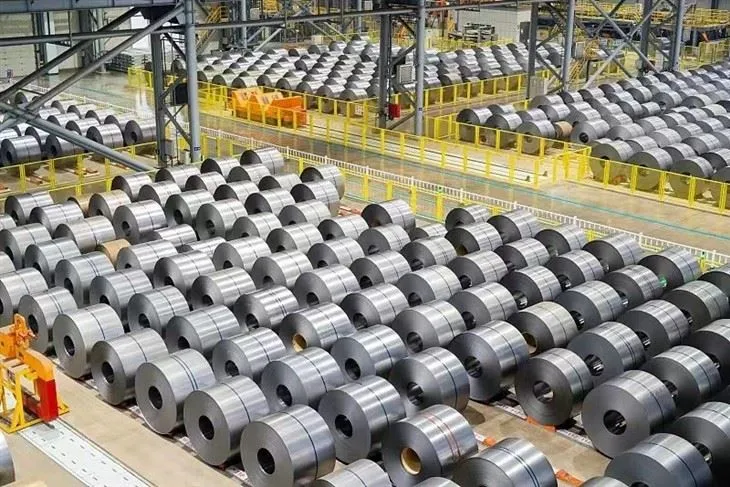

Our Factory
One-stop service helps you choose products suitable for your market and budget, save time, and achieve win-win cooperation.
Contact Us
Email
nancy@cn-hormann.com
Address
No. 2687 Ziwei Road, University Science Park, Changqing District, Jinan City, Shandong Province Room 1015, Area A, 10th Floor, Building A, West Innovation Park, Jinan
Phone
+8618769555682
+8613153828686
+8613153828686
Frequently Asked Questions
As one of the most professional galvanized steel coil manufacturers and suppliers in China, we're featured by quality products and competitive price. Please rest assured to buy galvanized steel coil for sale here and get free samples from our factory. Also, customized service is available.
Galvanized Steel Coil, ASTM Galvanized Steel Coil, A653Galvanized Steel Coil