

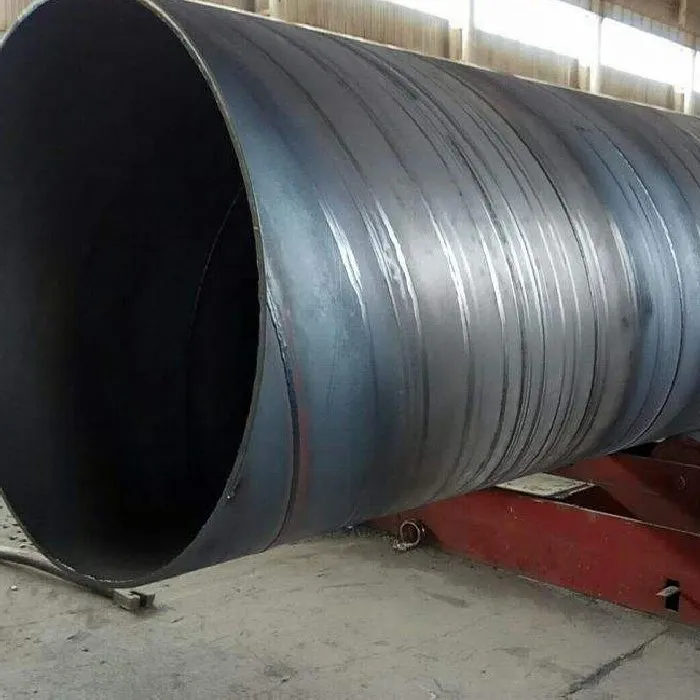
As a supplier of A106 Spiral Welded Tubes, I've had numerous discussions with clients regarding the compatibility of these tubes with other materials. Understanding this compatibility is crucial as it directly impacts the performance, durability, and overall success of various applications. In this blog, I'll delve into the key aspects of the compatibility of A106 Spiral Welded Tubes with different materials.
Compatibility with Metals
Carbon Steel
A106 Spiral Welded Tubes are made of carbon steel, so they are highly compatible with other carbon - steel materials. Carbon steel is known for its strength, ductility, and relatively low cost. When used in conjunction with other carbon - steel components, such as flanges or fittings made of carbon steel, there is no risk of galvanic corrosion. Galvanic corrosion occurs when two dissimilar metals are in contact in the presence of an electrolyte. Since A106 tubes and other carbon - steel parts have similar electrochemical properties, they can work together seamlessly. For example, in a pipeline system where A106 Spiral Welded Tubes are connected to Q235B Spiral Welded Pipe, which is also a type of carbon - steel pipe, the joint will be strong and resistant to corrosion over time.
Stainless Steel
When considering the compatibility of A106 Spiral Welded Tubes with stainless steel, things get a bit more complex. Stainless steel has a high chromium content, which gives it excellent corrosion resistance. In contrast, carbon - steel A106 tubes are more prone to rusting. If A106 tubes are in direct contact with stainless - steel components without proper insulation, galvanic corrosion can occur. However, this can be mitigated by using insulating gaskets or coatings. For instance, in a chemical processing plant where an A106 tube needs to be connected to a stainless - steel valve, using a non - conductive gasket between the two can prevent the flow of electric current and thus avoid galvanic corrosion.

Aluminum
A106 Spiral Welded Tubes and aluminum have a significant difference in their electrochemical potentials. Aluminum is more anodic compared to carbon steel. When these two metals are in contact in a moist environment, aluminum will corrode preferentially. To use A106 tubes with aluminum components, proper isolation is essential. This can be achieved through the use of dielectric unions or coatings. In some architectural applications where A106 tubes are used for structural support and need to be connected to aluminum cladding, using a dielectric coupling between the tube and the aluminum part is a common solution.
Compatibility with Non - Metals
Rubber
Rubber is often used as a sealing material in piping systems. A106 Spiral Welded Tubes are generally compatible with rubber gaskets. Rubber has good flexibility and can form a tight seal around the tube, preventing leakage. Different types of rubber, such as nitrile rubber or EPDM rubber, can be used depending on the application. For example, in a water - supply pipeline, EPDM rubber gaskets can be used to seal the joints of A106 tubes. EPDM is resistant to water, ozone, and weathering, making it a suitable choice for this type of application.
Plastic
There are various types of plastics that can be used in conjunction with A106 Spiral Welded Tubes. PVC (Polyvinyl Chloride) is a common plastic used for insulation or as a protective layer. PVC is chemically stable and can provide good insulation against moisture and corrosion. For example, TPEP Anticorrosive Carbon Steel Spiral Pipe often has a TPEP (Three - layer Polyethylene) coating, which is a type of plastic - based coating. This coating helps to protect the A106 tube from external corrosion and mechanical damage.
Fiberglass
Fiberglass is a strong and lightweight material that can be used for reinforcement or insulation. A106 Spiral Welded Tubes can be combined with fiberglass in some applications. For example, in a high - pressure pipeline system, fiberglass - reinforced plastic (FRP) can be used as an outer layer for the A106 tube to increase its strength and corrosion resistance. The combination of the strength of the A106 tube and the corrosion - resistance of FRP makes the pipeline more durable.
Compatibility in Different Environments
Corrosive Environments
In corrosive environments, such as chemical plants or coastal areas, the compatibility of A106 Spiral Welded Tubes with other materials becomes even more critical. In a chemical plant where there are various corrosive chemicals in the air or in the fluid being transported, using compatible materials is essential to prevent rapid corrosion. For example, if the fluid contains acids, using a corrosion - resistant lining inside the A106 tube or connecting it to corrosion - resistant pipes like Ssaw 609 Mm Carbon Steel Pipe Helical with proper coatings can ensure the longevity of the pipeline.
High - Temperature Environments
In high - temperature environments, such as power plants or industrial furnaces, the thermal expansion properties of different materials need to be considered. A106 Spiral Welded Tubes have a certain coefficient of thermal expansion. When combined with other materials, if their thermal expansion coefficients are too different, it can lead to stress and potential failure of the joint. For example, when connecting an A106 tube to a ceramic component in a high - temperature furnace, the difference in thermal expansion can cause cracks or leaks. Therefore, proper design and selection of materials are necessary to ensure compatibility in high - temperature applications.
Conclusion
The compatibility of A106 Spiral Welded Tubes with other materials is a multi - faceted issue that depends on the type of material, the environment, and the application. By understanding the electrochemical properties, thermal expansion characteristics, and chemical resistance of different materials, appropriate combinations can be made to ensure the optimal performance of the piping system.
If you are in the market for A106 Spiral Welded Tubes or have questions about their compatibility with other materials, I encourage you to reach out for a detailed discussion. Our team of experts is ready to assist you in making the right choices for your specific project.
References
- ASME B31.3 Process Piping Code
- ASTM A106 Standard Specification for Seamless Carbon Steel Pipe for High - Temperature Service
- NACE International Standards for Corrosion Prevention in Piping Systems